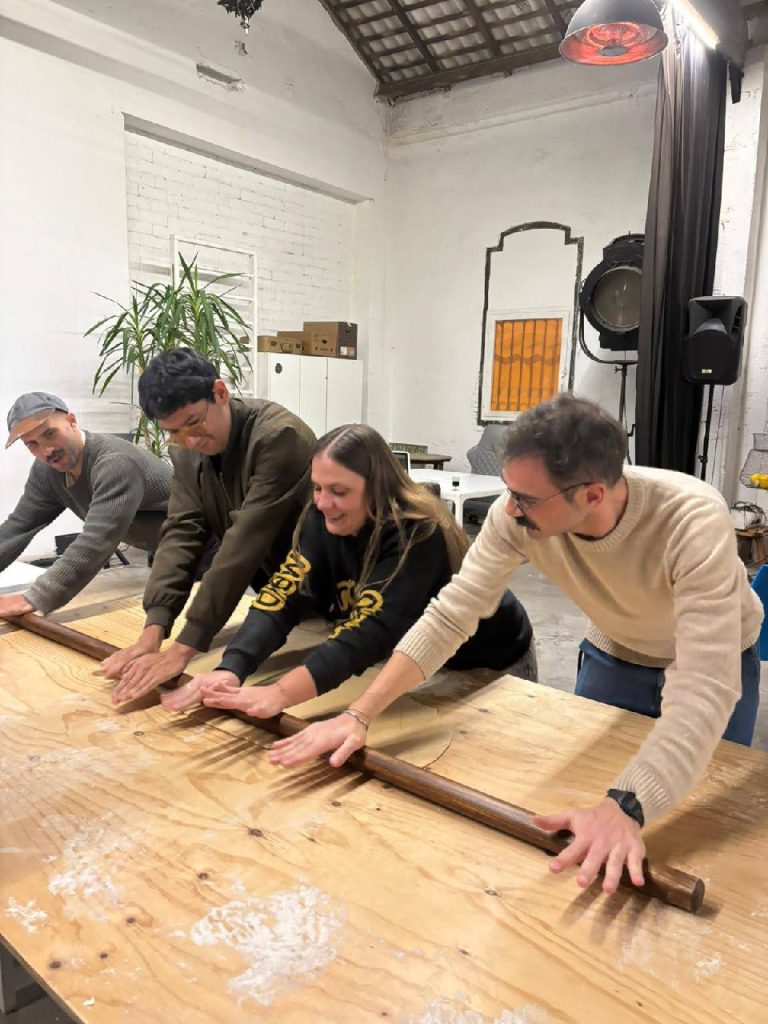
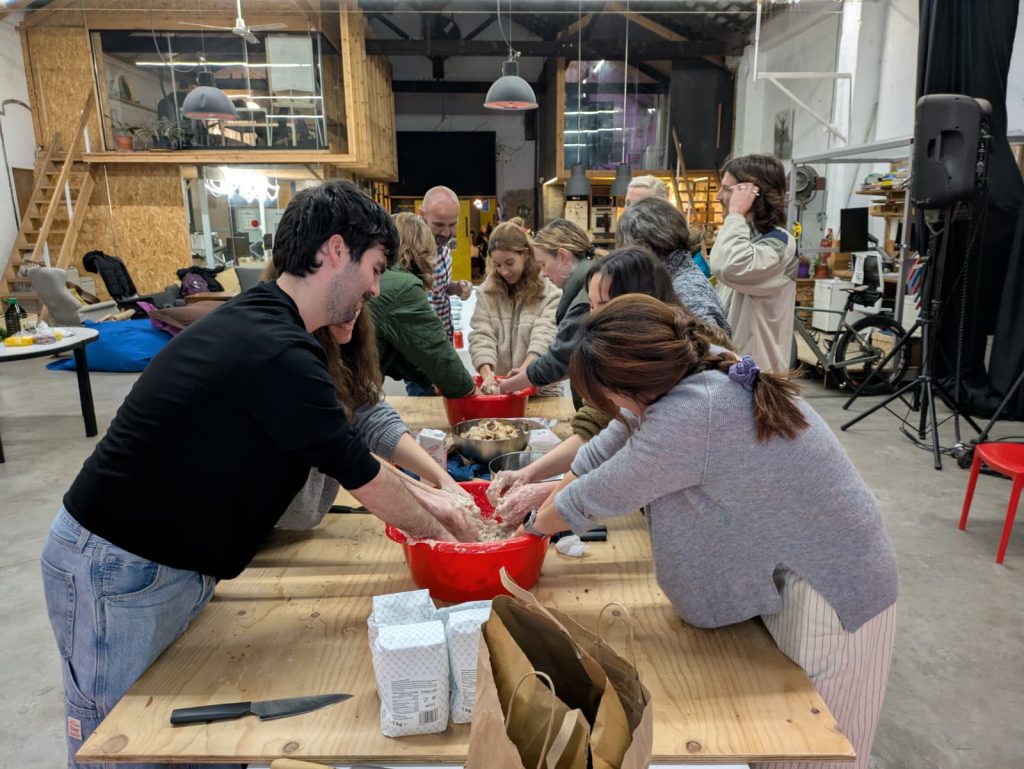
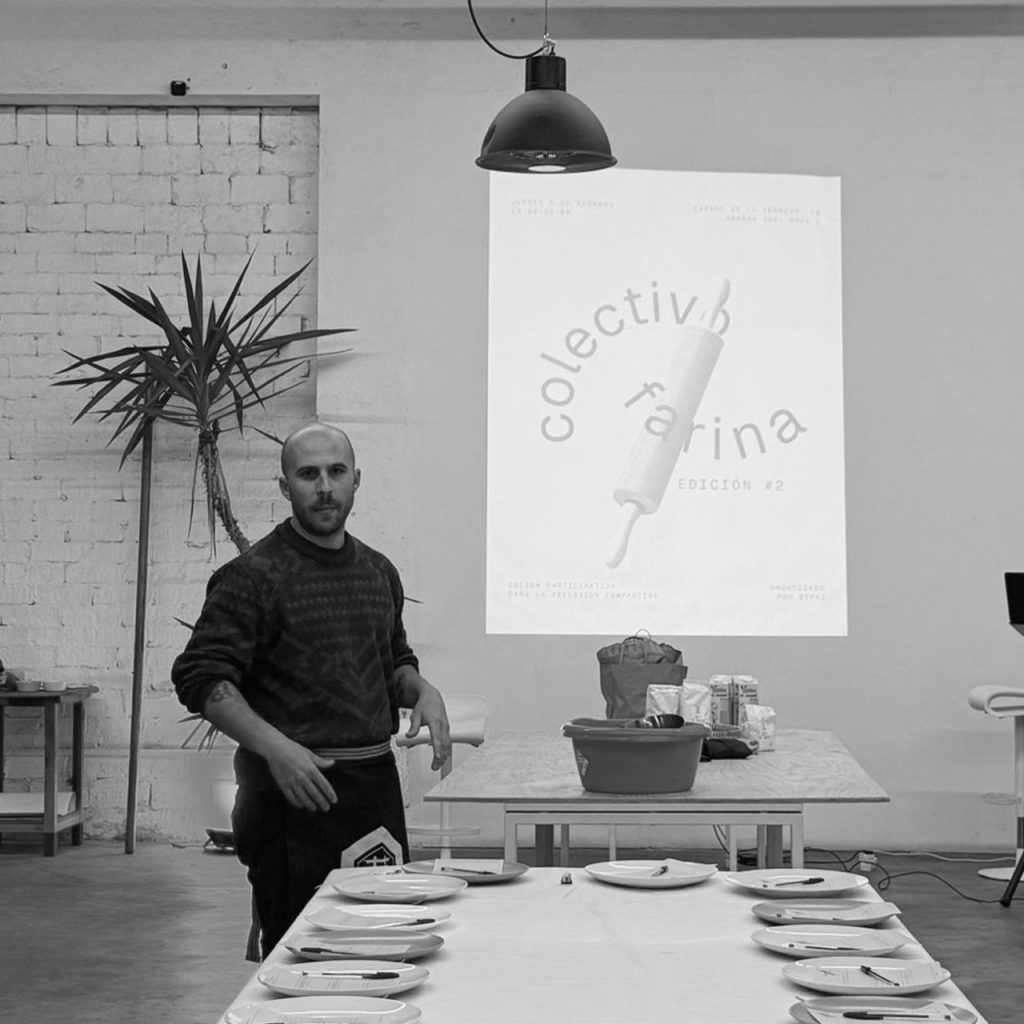
What for? Colectivo Farina seeks to reconnect with ingredients and revive forgotten cooking techniques, reducing gadgets and focusing on manual, artisanal and even ancestral methods. All this is done through shared and participatory practices, where cooking becomes a collective act once again, rather than an individual one. At bifaz, we believe that the future of eating is not only about what we cook, but also how and with whom, focusing on cooking as an act of community and resistance to the fast-paced lives we lead.
What’s it about?
This project consists of culinary gatherings based on a cross-cutting concept (which will vary in each edition) with the aim of reflecting on sustainability, culture and the future of our culinary practices. All this leads to a collective cooking activity, where the end result will be, for the most part (but not limited to), pasta, used here as a versatile, accessible and deeply communal format.
Why Farina?
From the Latin farīna, ‘flour’ or ‘fine grain powder’, a staple ingredient in countless cultures since the dawn of time. Economical, everyday and substantial, flour represents simplicity at its finest. And that is what this project is all about: returning to the essentials. Cooking from scratch, without artifice, where pasta will be our main vehicle, not because of technique, but because of what it symbolises: unity, craftsmanship and a common starting point.
‘Here, we are all cooks and no one is left out. There are no leading roles or hierarchies: the result is always the product of all our hands and all our minds.’
Sessions 2025-2026
Farina Collective #1: Minimisation
In our inaugural edition, we explore minimisation as a tool for rediscovering the value of the essential.
The workshop focuses on reducing visual and technical noise to concentrate on the purity of ingredients and manual gestures: using everyday items as a creative axis.
By making ravioli from scratch—with a simple base of flour, egg, and water—we transform the kitchen into a space of absolute presence.
Here, getting our hands dirty is not just a technical step, but the direct result of a concept that seeks the maximum expression of flavour through minimal intervention from industrial processes.
Farina Collective #2: Optimisation
For this second instalment, we shift the focus to resource optimisation under a zero-waste philosophy.
The workshop encourages active reflection on waste, demonstrating how design can give a second life to ingredients that we usually discard.
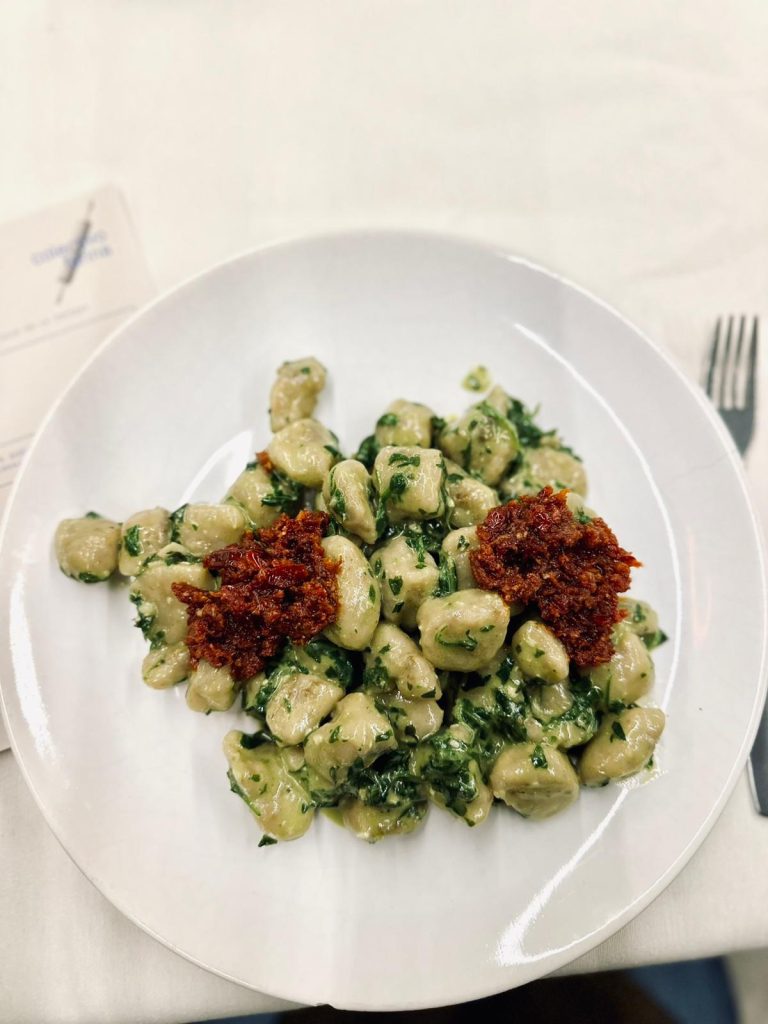
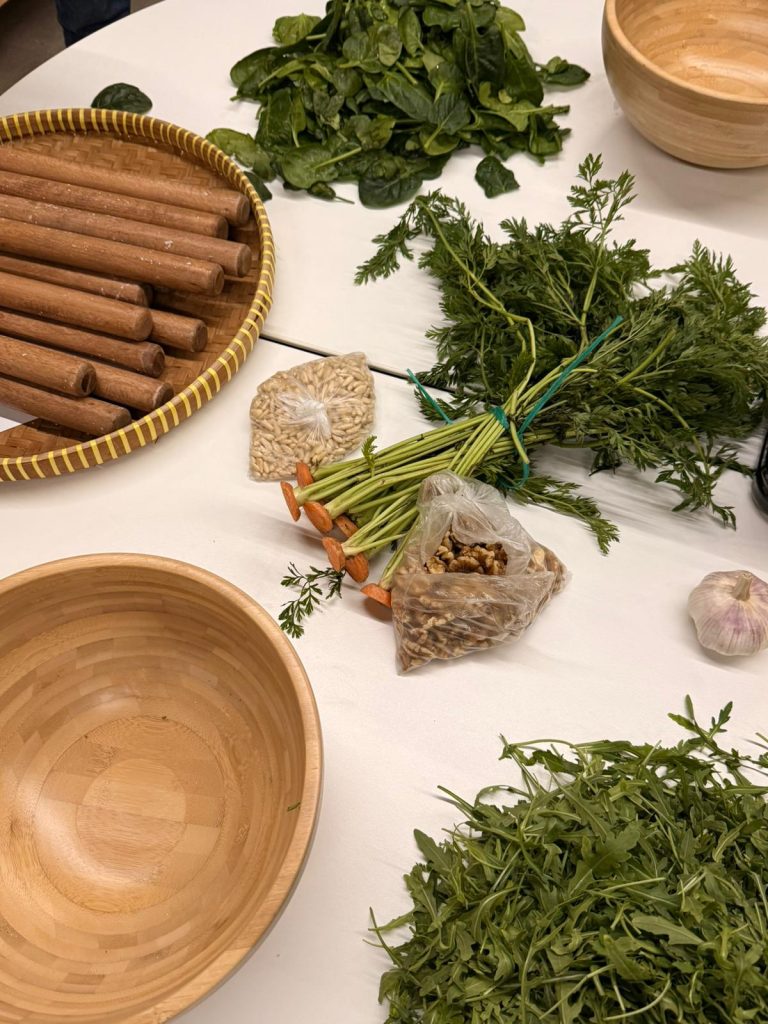
The dynamic takes the form of a menu where the pasta is made from stale bread collected from local bakeries, accompanied by a pesto made from recovered seasonal herbs.
The result is an exercise in systemic creativity: a vegetarian menu that demonstrates that efficiency and maximum use of raw materials can generate high-value gastronomic experiences.
About Bifaz
A speculative workshop for shared dining
Bifaz explores the interconnections between food, craft and community through experiences, objects, open knowledge and participatory design. Our focus is on building more connected and self-sufficient ways of living and doing through everyday practices such as cooking, sharing and creating, challenging our concepts of convenience with encounters that prioritise conviviality, temporality and circularity within what it means to be human.
@bifazworks
Welcome. This website uses functional and analytical cookies. We understand that if you continue to browse you are agree with it.